Southwest Colorado, where desert and alpine environments meet, is a beautiful place to live and work—but it is also a challenging place to deliver reliable electric service. Cold, snowy winters; hot, dry summers; and dense forests all place unique demands on rural electric infrastructure. For electric utilities serving rural and rugged areas, these types of conditions create ongoing pressure on reliability, safety, and maintenance resources. However, these challenges are not reasons to retreat—they are a responsibility to respond with creativity, collaboration, and innovation.
Turning risk into opportunity
For La Plata Electric Association, providing safe and reliable power means confronting environmental challenges head-on. One of the co-op's top priorities has been to reduce the frequency and duration of outages each year. To do this, LPEA tracks outages closely and uses cause, location, and duration to target maintenance projects accordingly.
In addition to tracking reliability, LPEA is also always looking for ways to reduce wildfire risk. This increasingly requires collaboration with emergency management agencies, state partners, community organizations, and members themselves, as well as innovation in how data and resources are used.
This continued focus on improving reliability and safety has pushed LPEA to think beyond traditional maintenance approaches and to take a closer look at where reliability improvements could have the greatest impact.
Why Los Ranchitos rose to the top
In 2023, LPEA worked with the La Plata County Office of Emergency Management on a mitigation project to clear an area for emergency egress in case of a wildfire.
“This got me thinking about the subdivisions in our service territory with limited access,” said Jerry Sutherlin, LPEA’s vice president of distribution operations. “I wanted to complete a ground-to-ceiling right-of-way clearing project in a high-wildfire-risk neighborhood with limited egress that experienced a higher number of outages.”
Los Ranchitos, a forested subdivision about 20 minutes northeast of downtown Durango, quickly emerged as a priority. The neighborhood is representative of many areas in LPEA’s service territory—densely wooded, served by overhead lines, located in a high-wildfire-risk zone, and with limited points of entry and exit.
Data confirmed what crews and residents had long experienced. Between 2019 and 2024, Los Ranchitos had 25 vegetation-related outages, the highest number of any neighborhood in LPEA’s system. Heavy snowfall compounded the problem, with 15 additional outages during a major snow year caused by snow unloading and line slap. With a clear project area identified, the next step was finding a way to support the work financially.
Leveraging grant funding to accelerate impact
As planning moved forward, LPEA began exploring funding opportunities that could help offset project costs and expand the scope of mitigation work. In May 2024, Sutherlin identified a grant offered through the Colorado Department of Natural Resources’ Strategic Wildfire Action Program, which supports fuels reduction and wildfire mitigation projects.
LPEA was awarded $50,000 in grant funding in August 2024. The grant helped supplement right-of-way clearing efforts while reinforcing the value of state and local partnerships in reducing wildfire risk. Combined with internal cost savings, the funding allowed LPEA to stretch member dollars further while moving the project forward more quickly. Once funding was secured, LPEA wanted to ensure the project had strong community support.
Building trust through community engagement
Large-scale vegetation projects require more than technical planning—they depend on trust. LPEA initially announced the project, via email, to Los Ranchitos residents in August 2024. Then the real community work began. The co-op partnered with a resident ambassador trained through Fire Adapted Colorado’s ambassador program. The program trains local leaders to coordinate mitigation efforts, engage neighbors, and advocate for community-specific priorities.
“Without the local ambassador, this project would have been much more difficult,” Sutherlin said. “He led the effort to communicate with his neighbors about why this work was so important and in their best interest.”
Over roughly six months, LPEA staff and contractors worked closely with residents. Teams flagged each tree that needed to be removed. LPEA staff met with individual homeowners to discuss options for questionable trees on the edge of the right of way. Plans were made for timber use and road maintenance. Brush management and mastication had to be scheduled around high-fire-risk season. The preparations alone required a great deal of coordination.
“In the end, the members were on board,” Sutherlin said. “They realized the benefits—reduced fire risk from our powerlines, fire breaks during a wildfire, fewer tree-caused outages, and improved access for emergency personnel.”
As the face-to-face work progressed, data and mapping tools played a critical role behind the scenes, turning plans into action.
Data-driven planning and staff innovation
A key piece of the Los Ranchitos project was LPEA’s investment in an internal geographic information system and vegetation management tool. Previously reliant on third-party software, LPEA migrated its vegetation data to an in-house platform with a mapping solution that could be used by local partners.
The data—originally built using satellite imagery to classify vegetation encroachment risk—allowed staff to prioritize projects objectively and ultimately led to the identification of Los Ranchitos as a high-risk area. The in-house tool is now used by LPEA and its local vegetation management partner to plan work and track progress. According to internal estimates, the move is expected to save the cooperative approximately $150,000 over a three-year period—funds that can be reinvested into additional reliability and wildfire mitigation efforts.
So, with planning, funding, and community support aligned, crews moved into the field.
From planning to completion
Field work began in May 2025 and concluded in August 2025. Crews cleared a full 20-foot, ground-to-ceiling right of way beneath overhead distribution lines throughout the subdivision—removing vegetation that had long contributed to outages and wildfire risk.
Los Ranchitos By the Numbers
- 4.25 miles of line cleared
- 10.3 acres of right-of-way opened (10 feet on each side of the line)
- 409 trees removed
- 231 trees trimmed
- 25 outages in 5 years due to vegetation
- 15 outages from "line slap" in the last major snow year
- $50,000 in grant funding
With the vegetation cleared, LPEA took the opportunity to address snow-related outages as well. The cooperative installed neutral standoff brackets throughout Los Ranchitos. These upgrades help prevent line slap, which occurs when energized conductors and neutral wires come in contact during snow unloading events. While long-term performance will be measured over time, early results are already encouraging.
Early outcomes and a model for the future
Since the completion of right-of-way clearing, Los Ranchitos has experienced no vegetation-related outages. There has already been one significant snowstorm since this work was completed, and the lights stayed on in Los Ranchitos—an early indicator the targeted upgrades are working as intended.
“Time will tell how effective the work is,” Sutherlin said. “But I hope they never experience another outage due to snow or vegetation issues.”
Beyond immediate results, the Los Ranchitos project serves as a scalable model for addressing reliability and wildfire risk in similar environments. By combining data-driven decision-making, staff innovation, grant funding, and strong community partnerships, LPEA demonstrated how cooperatives can proactively invest in resilience—even in the most challenging landscapes.
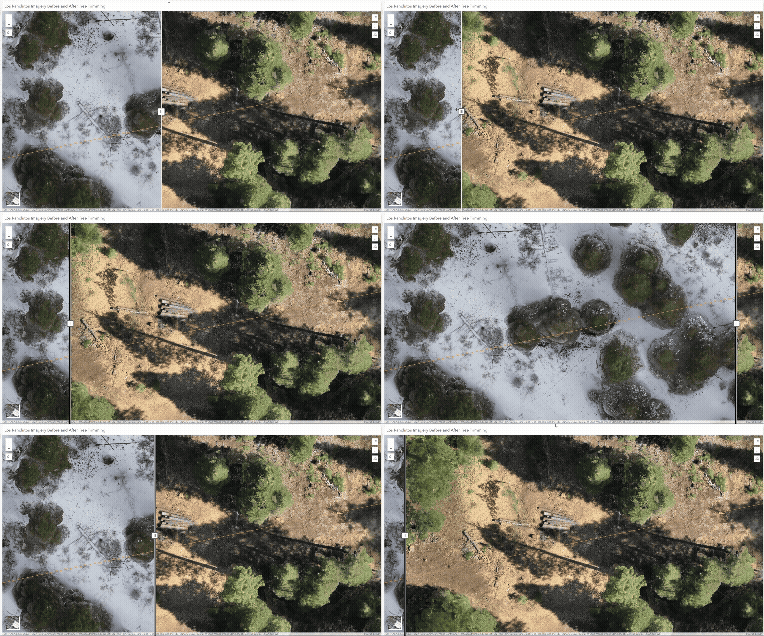
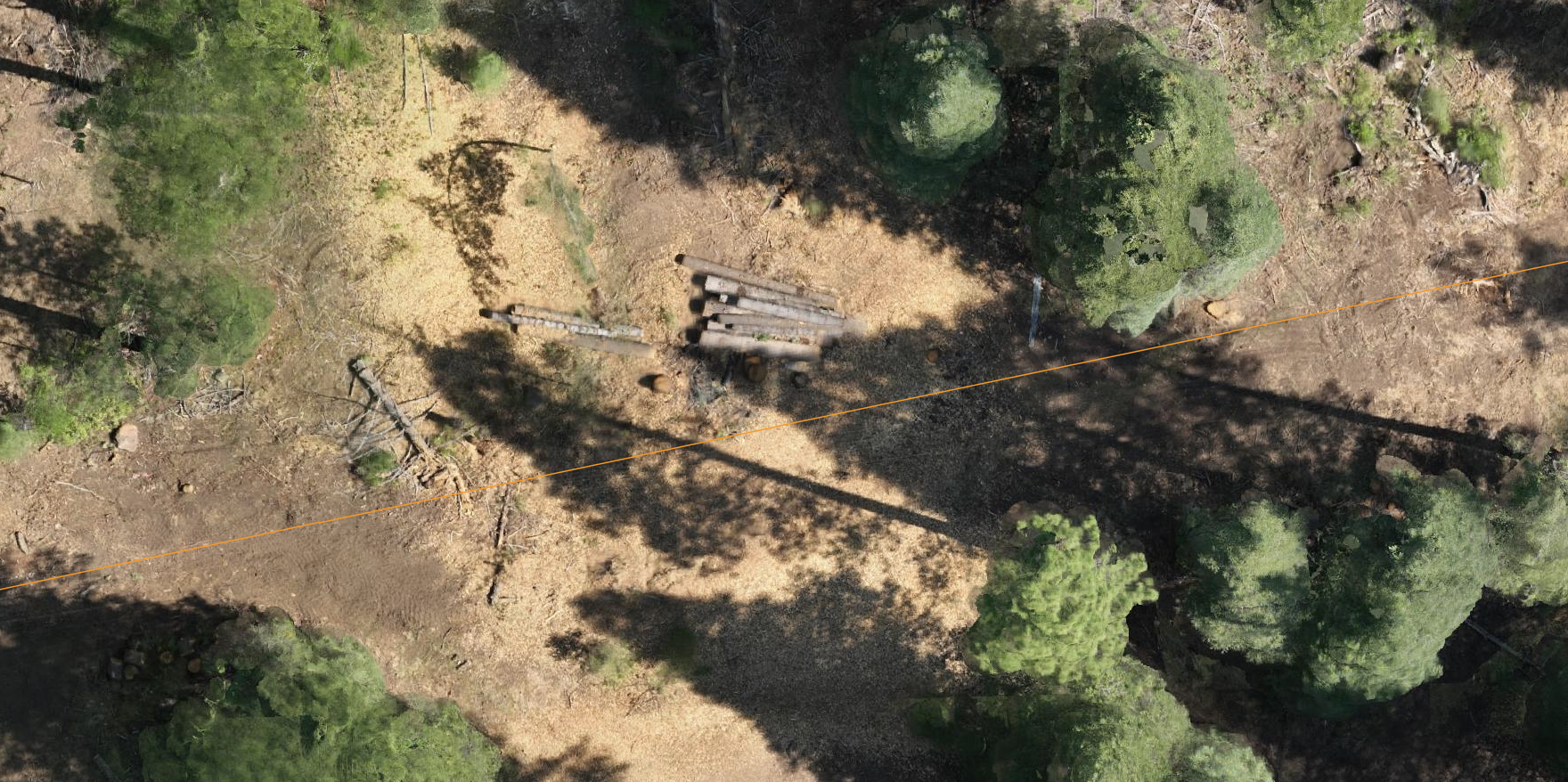
Before and After
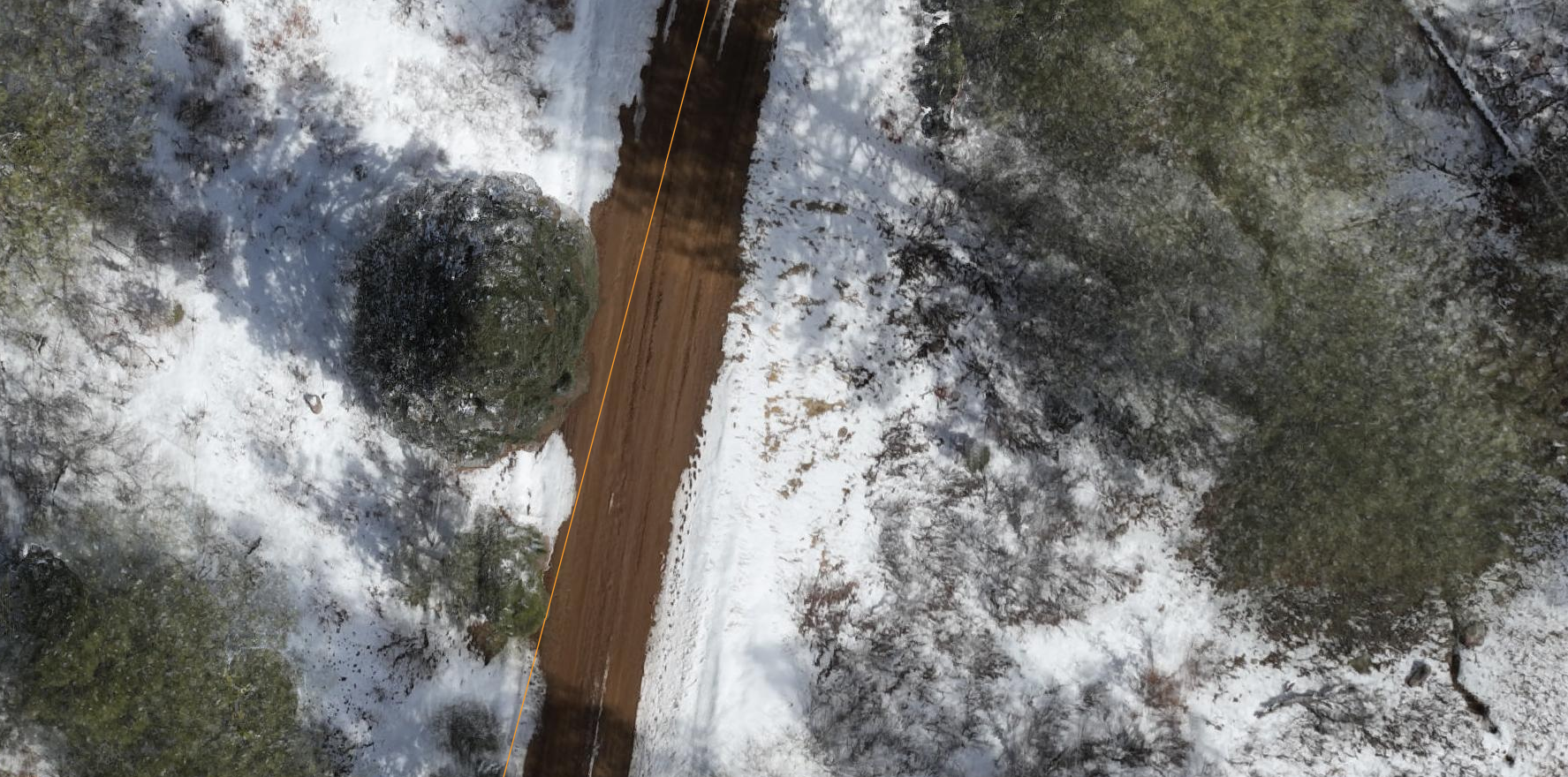
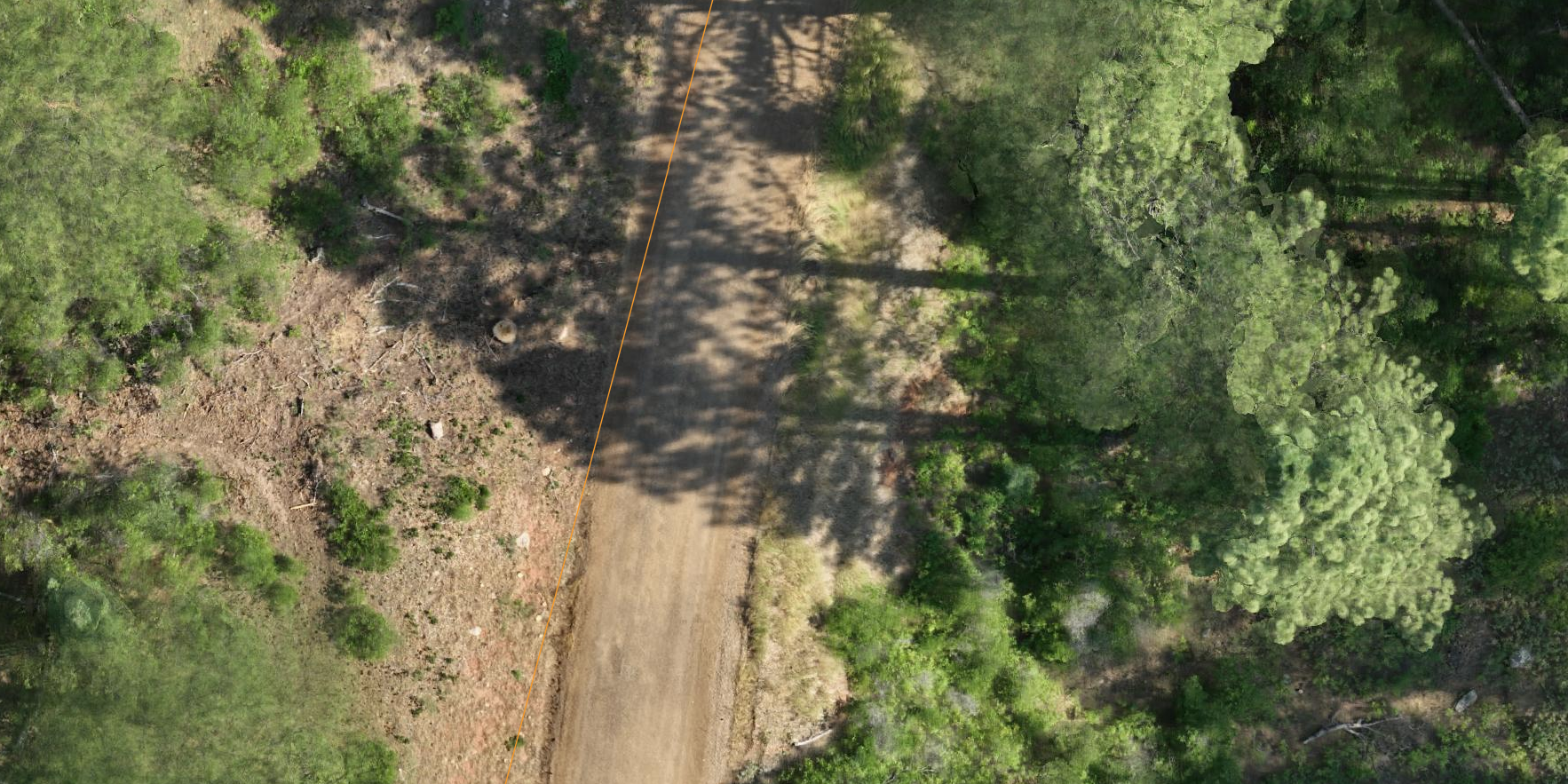
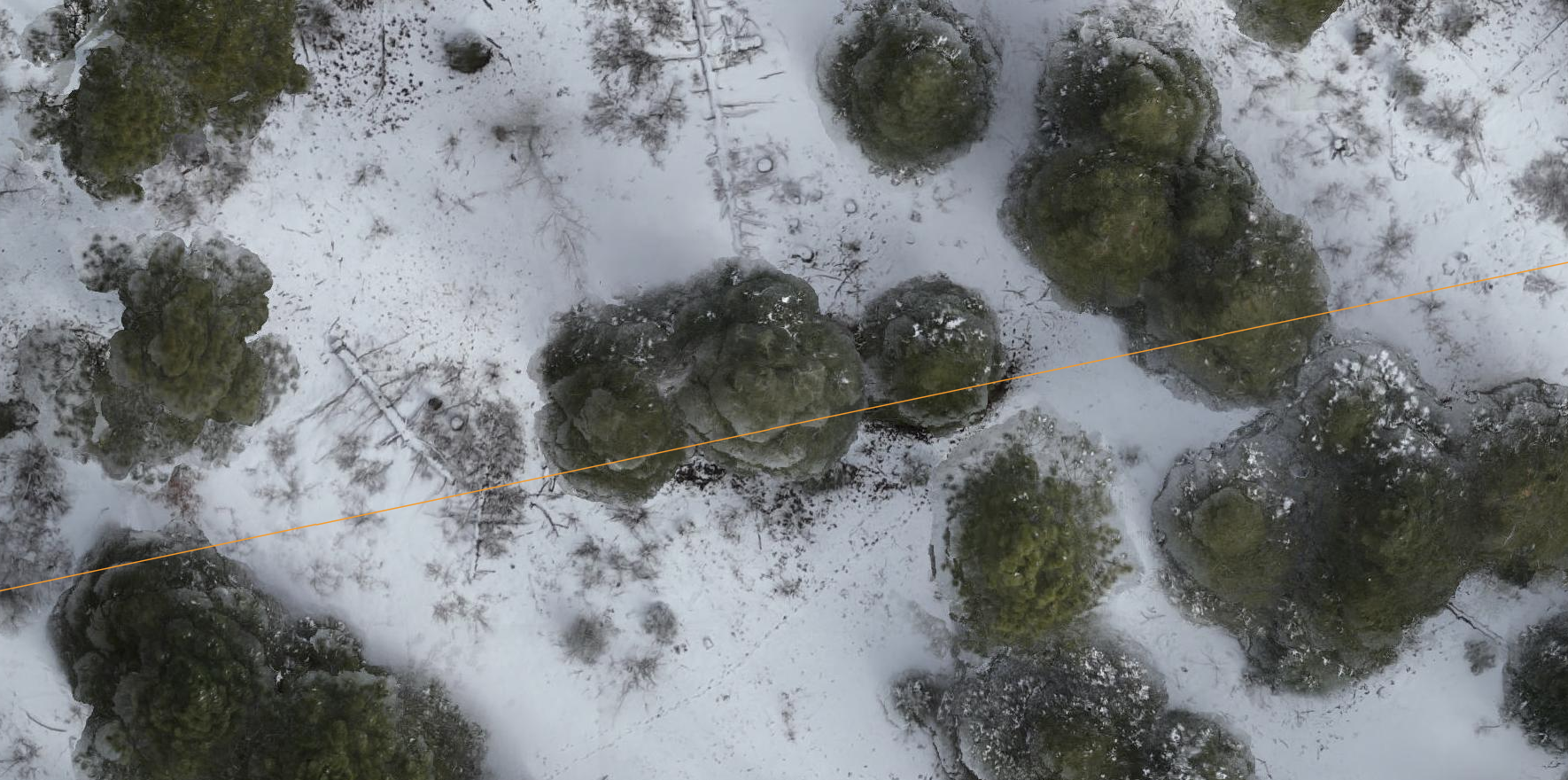
Compare a few images captured from above in April before work began and again in August after tree trimming work was completed.