
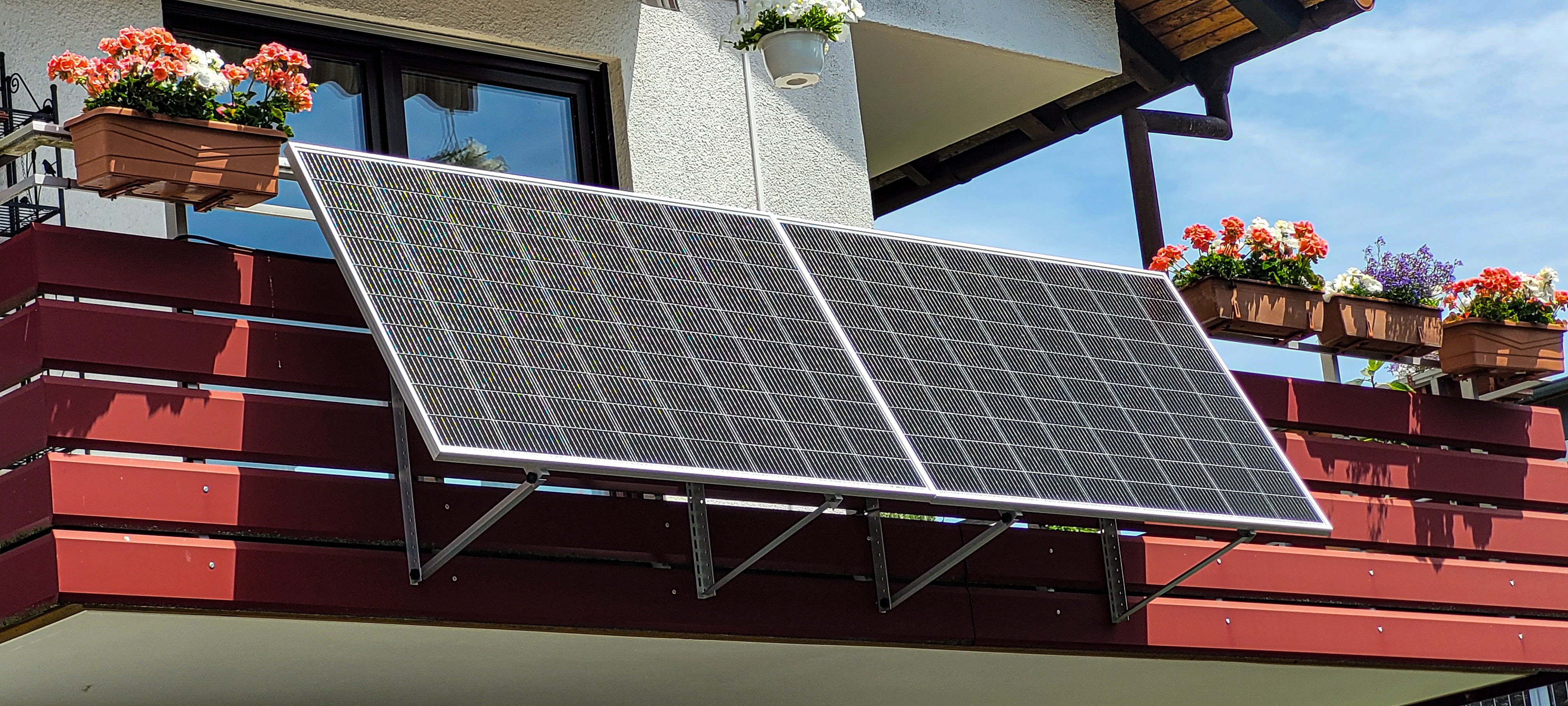
Starting August 12, 2026, a new Colorado law (House Bill 26-1007) makes it easier for homeowners to connect small, plug-in solar power systems to their home electrical system.
If you're considering a plug-in solar system before January 1, 2027, please contact us directly at renewables@lpea.coop. Requirements and available equipment are still evolving, and we want to make sure you have the most current information before you purchase or install anything.
Here is what LPEA members should know:
What is a Plug-in Photovoltaic (PIPV) System?
Plug-in PV, also known as "balcony solar" or "portable solar", is a small solar setup that is plugged into an outlet in your home without requiring a full traditional installation. These systems are typically one to four solar panels and use micro-inverters to convert the solar power into usable AC electricity. Think of it as a simpler, more accessible way to generate a little solar energy at home to cover your daytime electricity usage.
How does PIPV work?
- Panels are securely installed (on a balcony, in a yard, etc.) at the residence
- They are then plugged directly into a 120-volt outlet. Smaller systems (≤391 watts) can plug into a standard outlet, but larger systems require a special receptacle to ensure a safe connection to the home.
- Solar-generated power flows from the PIPV system through the outlet into the home's electric system.
- This generated power can offset the power normally pulled from the grid. (Please note that these systems are NOT eligible for net-metering)
- PIPV systems feature a micro-inverter that syncs with the grid and automatically shuts off if the power goes out, to prevent backfeeding and endangering utility workers during the outage.
What size system can I install?
Colorado residents are allowed to install:
- Systems up to 1.92 kW AC (1,920 watts).
- Plug-in systems greater than 1,920 watts are not permitted under this law.
- Smaller systems (≤ 391 watts) can generally be self-installed without permits, while larger plug-in systems (between 391 and 1,920 watts) require a licensed electrician.
How much can I save with a PIPV system?
Pricing for these PIPV systems starts around $400 to $500. They offset daytime energy use and can lower monthly electric bills. A 391-watt system that is optimally installed for solar generation might reduce a monthly bill by up to $5-$10.
Utilities are not required to net meter these systems, so members will not be compensated for any power that is produced but not used on-site.
For the best financial value, we recommend members look at their SmartHub account for hourly usage data and select a system size that matches their typical usage from 10:00 AM to 4:00 PM.
What's Required Under the New Law?
- Members must notify LPEA if they install a PIPV system, but we cannot prohibit members from installing a system, and we cannot charge members for installing a PIPV system.
Please email renewables@lpea.coop if you have questions or to notify LPEA of your plug-in solar system. - Colorado residents are allowed to install no more than one plug-in solar PV system per residence.
- All PIPV systems over 391 watts must meet the UL 3700 product safety standards (see requirement summary below), which include several consumer and grid protections.
Please note, this certification is not yet finalized, and as of summer 2026, NO CONSUMER PRODUCT MEETS THESE STANDARDS.
Updates should become available by January 1, 2027. Systems 391 watts or smaller are exempt from this certification, but we strongly recommend that they still comply. - Colorado law prohibits Homeowners' Associations (HOAs) from unreasonably prohibiting PIPV devices, if they are interconnected safely.
What are the UL 3700 safety standard requirements?
Systems producing 391 watts or less are exempt from these requirements.
-
UL 3700 Compliance: Any plug-in system that delivers more than 391 watts must be certified and labeled by a Nationally Recognized Testing Laboratory (NRTL) in accordance with the UL 3700 standard.
-
Built-in Safety Feature Requirements:
- Rapid de-energization, meaning the plug prongs go dead within one second of being unplugged, to prevent shock.
- Anti-islanding protection, which ensures the system shuts down during grid outages, to prevent backfeeding and potentially harming utility workers.
- Dedicated outlet and circuit, preventing overloading and ensuring ground-fault circuit interrupter (GCFI) compatibility for bi-directional power flow.
- Licensed Electrician: A licensed electrician must perform any modifications to a building's electrical wiring to connect a PIPV system between 391 and 1,920 watts.
Questions?
Reach out to us at renewables@lpea.coop.